
A detailed IT budget doesn’t need a line for every small purchase. When creating an IT budget for a small business, give significant recurring and one-off costs clear categories, then group minor items. Most small-business budgets use around 10 to 15 expense categories overall, with enough IT detail to see where money is going.
It’s easy to treat technology as a collection of separate bills. But bringing those costs together helps you plan for renewals, replacements and security needs instead of reacting when something becomes urgent. The right level of detail is the one that makes spending clear and useful for decisions.
This guide explains how to organise IT costs, set financial targets that reflect your business and review your budget as circumstances change. You’ll also learn how to choose a practical planning period, from monthly reviews to a longer-term view, so your budget supports day-to-day stability and future growth.
Key Takeaways
- Separate recurring technology commitments from usage-based spending and planned replacements to see what drives your IT costs.
- Compare actual spending with your plan regularly, then adjust projections when business needs or income change.
- Set practical short- and long-term targets using past income, seasonal patterns and cautious sales expectations.
- Use a clear budget to spot cash-flow pressure early, plan technology investments and make more confident business decisions.
Separating fixed and variable costs
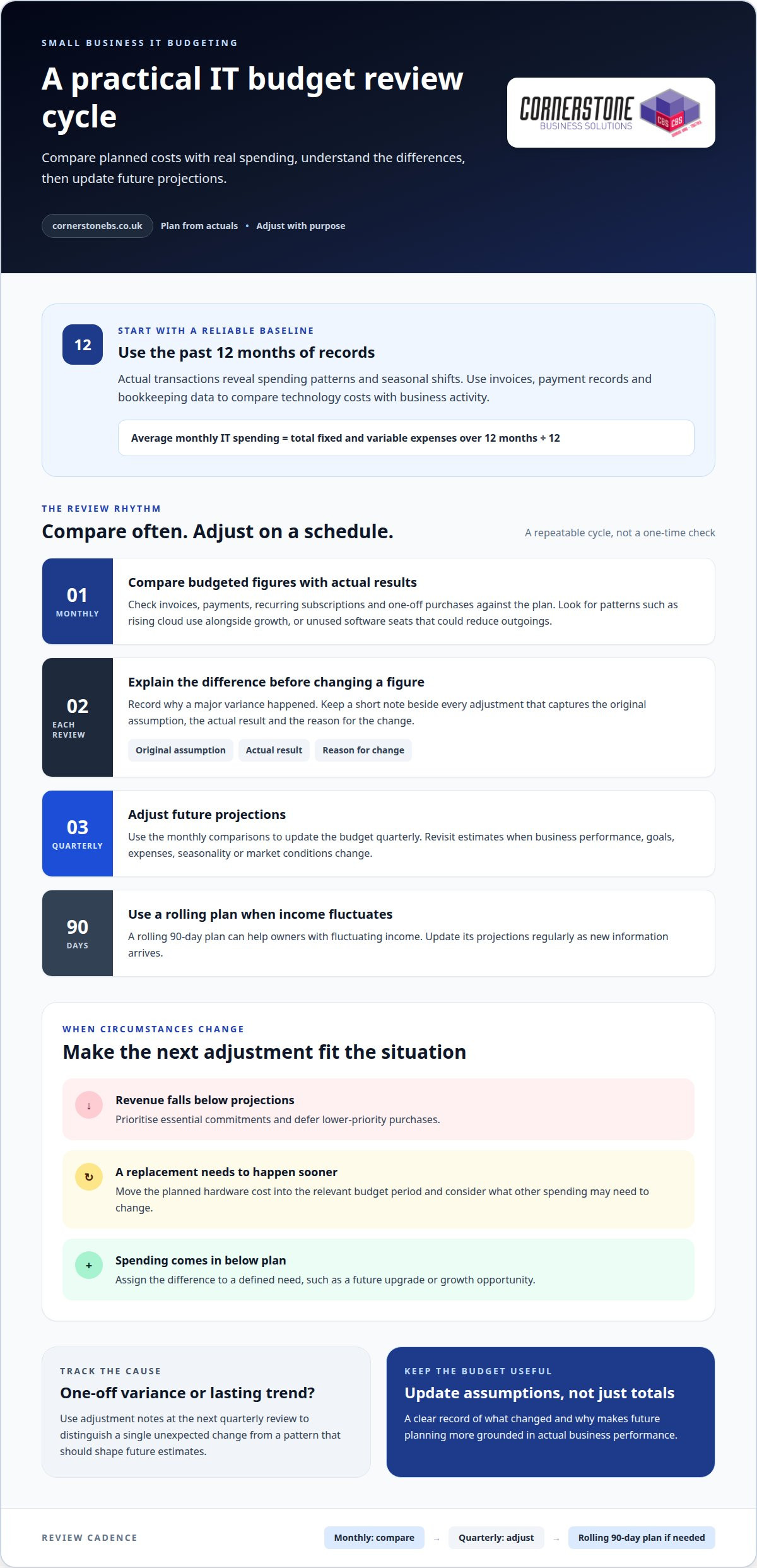
Start with actual transactions, then sort each IT expense by how and when it changes. Use the past 12 months to estimate average monthly spending: add fixed and variable expenses, then divide the total by 12.
-
List fixed and variable expenses
Separate predictable commitments from costs that vary with usage, staffing or demand. Fixed expenses can include recurring software licences or support agreements; variable costs may include extra cloud usage, data charges or replacement accessories. Review invoices and payment records, noting each item’s cost, frequency and business purpose. This gives you a clearer view of the funds available for IT and future profit.
Choose a budgeting method that suits your records. A fixed budget keeps projections unchanged during the period, while a flexible budget adjusts them as activity changes. Zero-based budgeting starts each period at zero and requires every expense to be justified. Incremental budgeting makes small adjustments to the previous budget.
-
Assess IT cost categories
List outsourced IT support separately from in-house staffing. Compare the full employment costs and internal capacity required with the scope of outsourced support, rather than comparing salary with a service fee alone. There is no single IT budget per employee: device needs, software access, support, security controls and replacement plans all affect the figure.
List hardware, software and cloud services separately, alongside cyber security, data protection and future upgrades. Costs depend on the equipment, licences, usage and level of protection your operations need. To reduce spending without increasing security or downtime risks, remove unused licences, consolidate overlapping tools and prioritise maintenance over abrupt cuts to essential safeguards.
Forecast replacements by recording each asset, its condition, business role and expected replacement timing. Spread planned upgrades across future budget periods, and update estimates when equipment performance or business demands change. For tax and VAT planning, record equipment and software purchases separately: their treatment depends on purchase type, business use and VAT position. Build the budget from net costs where VAT is recoverable, and distinguish capital purchases from recurring expenses.
Reviewing and adjusting a budget
Compare planned figures with actual spending to see how closely the budget reflects reality. Review it regularly, then adjust future projections as business performance, seasonality and priorities change.
-
Review historical financial data
Use actual transactions to identify patterns before changing the coming period’s budget. Looking at 12 months of records gives you a longer-term picture of income and spending, including seasonal shifts. Compare technology costs with business activity: rising cloud use may follow growth, while unused software seats can reveal an opportunity to reduce outgoings. Consider current market trends alongside historical results when spotting risks or opportunities.
-
Set a regular review schedule
Compare budgeted figures with actual results monthly, then adjust the budget quarterly. At each monthly review, check invoices, payments, recurring subscriptions and one-off purchases against the plan. Record why major differences occurred, rather than simply changing a figure to make it fit. Owners with fluctuating income can use a rolling 90-day plan, updating its projections regularly as new information arrives.
-
Adjust the budget
Update forecasts when actual performance, goals, expenses or market conditions shift. If a planned hardware replacement moves forward, revise the relevant period and consider what other spending may need to change. If revenue falls below projections, prioritise essential commitments and defer lower-priority purchases. If spending comes in below plan, allocate the difference to a defined need, such as a future upgrade or growth opportunity.
- Keep a short note beside every adjustment: the original assumption, actual result and reason for the change. This gives you a clear record at the next quarterly review and helps distinguish a one-off variance from a lasting trend. If technology spending is difficult to interpret, an IT budget review can help clarify the categories and assumptions you’re tracking.
Setting short- and long-term financial targets
Set a near-term target first, then connect it to longer-term plans. Use bookkeeping records and conservative income forecasts to ensure each goal fits your business’s financial position.
- Build a month-to-month forecast before setting annual targets. For irregular income, base your budget on the quietest month, not the strongest. Compare past sales trends with expected expenses, including fixed costs, before deciding what the business can commit to. For an average monthly revenue estimate, add revenue from the past year and divide by 12.
-
Set measurable business goals
Choose a target with a clear measure and deadline, then identify the spending needed to support it. A sample SMART goal for a startup is to increase sales by 20% over the next quarter. Track actual progress against that figure each month, and avoid treating a best-case forecast as guaranteed income. Longer-term goals can cover planned investment, growth or building a stronger cash position.
- Use seasonal sales patterns to plan for quieter periods. If sales typically rise or fall at particular times, map those trends against payment dates and regular outgoings. This helps you decide when to reserve income, postpone optional spending or prepare for an investment. Base the forecast on recorded results, not hoped-for growth.
-
Set aside contingency funds
Give unexpected expenses a place in the plan instead of relying on leftover cash. A general startup budgeting practice is to reserve 5%-10% of the total budget for unexpected expenses. Another useful target is a cash reserve covering one to three months of fixed costs. Choose a reserve goal that reflects your commitments and income pattern, then track contributions through bookkeeping.
- Review each target alongside the budget period it supports. A monthly goal can guide immediate decisions, while longer-term targets help you plan major changes without weakening day-to-day cash flow. If actual income falls short, revise the timing or scale of a goal before committing funds. If performance exceeds the forecast, decide deliberately whether the surplus should support reserves, investment or growth.
Why small businesses need a budget
A realistic budget turns figures into decisions. It helps you track cash flow, plan payments and assess whether technology spending supports business priorities.
- Use a documented budget to make spending visible. Clutch found that 61% of small businesses lacked a formally documented budget, while only 26% of businesses with 10 or fewer employees had created one. Without a shared record, owners can miss recurring software payments or overlook replacement needs. Record expected revenue and expenses, then compare actual results to spot pressure early.
- Connect the budget to cash flow, not just profit. Your business may record revenue before customers pay, while software subscriptions and supplier invoices have set payment dates. Map expected incoming payments against outgoing costs. This helps you prepare for quieter periods, avoid committing the same funds twice and plan purchases around available cash.
- Use clear categories to identify opportunities and make trade-offs. Separate software, equipment, security and communications expenses, then compare each category with its business purpose. For example, check whether active licences match staff needs before renewing them. A budget also helps distinguish essential spending from optional upgrades, so cuts don’t undermine continuity or create avoidable risks.
- Use the numbers to make a practical plan for growth. An analysis of more than 100 startup postmortems found that 29% failed because they ran out of money. Budgeting can help owners forecast upcoming expenses, protect working cash and assess whether planned technology supports expected demand. Include payment timing and seasonal changes, then update assumptions when actual results differ.
- Make the budget a decision tool, not a filing exercise. A cash-flow budget shows total revenue and expenses over time; a master budget combines information from other budgets for an overall financial picture. If business mobile or VoIP spending is hard to track, review your communications spending as part of the same planning process.
Cornerstone Business Solutions: Managed IT Support
Cornerstone Business Solutions provides Managed IT Support to help small businesses plan and manage their technology needs. It can be a useful next step when recurring support, Microsoft 365 or cyber security requirements are difficult to assess and organise within your IT budget.
Working with an IT partner can help connect planned spending to the systems your team relies on. You can also consider how services such as Business Mobile fit your operations, rather than treating each technology cost as an isolated purchase. The right priorities depend on your business, its existing setup and its plans.
To discuss your IT needs and budget, contact Cornerstone Business Solutions.
Make your IT plan work for what comes next
A useful budget should guide decisions as your business changes, not simply record past spending. As you plan your next steps, consider whether your technology supports how your team works today and where the business is heading. That connection makes creating an IT budget for a small business an ongoing part of planning, rather than a document that sits untouched.
Cornerstone Business Solutions can help you connect your budget priorities with practical technology planning. Its Managed IT Support, Microsoft 365 and Cyber Security offerings can support different parts of your business setup, from day-to-day IT needs to protecting the systems your team relies on. The right focus depends on your operations and priorities.
Talk through your plans with Cornerstone Business Solutions and take a considered next step towards technology that fits your business.
Frequently Asked Questions
How detailed does my budget need to be?
Make the budget detailed enough to show what each major IT commitment supports. When creating an IT budget for a small business, group small, similar purchases while tracking distinct costs separately. For example, keep a planned laptop replacement separate from monthly cloud storage. If a category makes changes difficult to spot or decisions hard to make, split it into clearer lines.
What should a small business include in an IT budget?
Include the technology your team needs to work, communicate and protect business information. Alongside devices and software, account for connectivity, cloud storage, backups, network equipment, security and technical support. Note whether each item is recurring or a one-off purchase, and identify the team or business function that relies on it. This helps reveal dependencies, such as an essential workflow relying on a single system.
How do you estimate IT costs for a new small business?
Start with a practical inventory of the people, devices and systems needed to begin operating. When creating an IT budget for a small business from scratch, list required equipment and services, then estimate costs based on planned purchases and subscriptions. Separate setup needs from ongoing commitments, and base usage assumptions on how the business expects to operate. Replace estimates with actual spending records as operations develop.
How should a small business prioritise IT spending and set a contingency?
Prioritise technology according to its impact on essential work, information security and business continuity. Fund the systems staff need to serve customers and access important records before optional upgrades. Then set aside contingency funds for unexpected repairs, urgent replacements or changes in demand. Define what qualifies for using this reserve, and record each withdrawal so planned spending stays distinct from unexpected costs.
What are the costs of outsourced IT support versus an in-house IT employee in the UK?
Compare the full employment costs and internal capacity required for an in-house employee with the scope of outsourced support, rather than comparing salary with a service fee alone.
Tags: budget planning, business finance, cash flow, IT Budgeting, IT spending, small business, technology costs